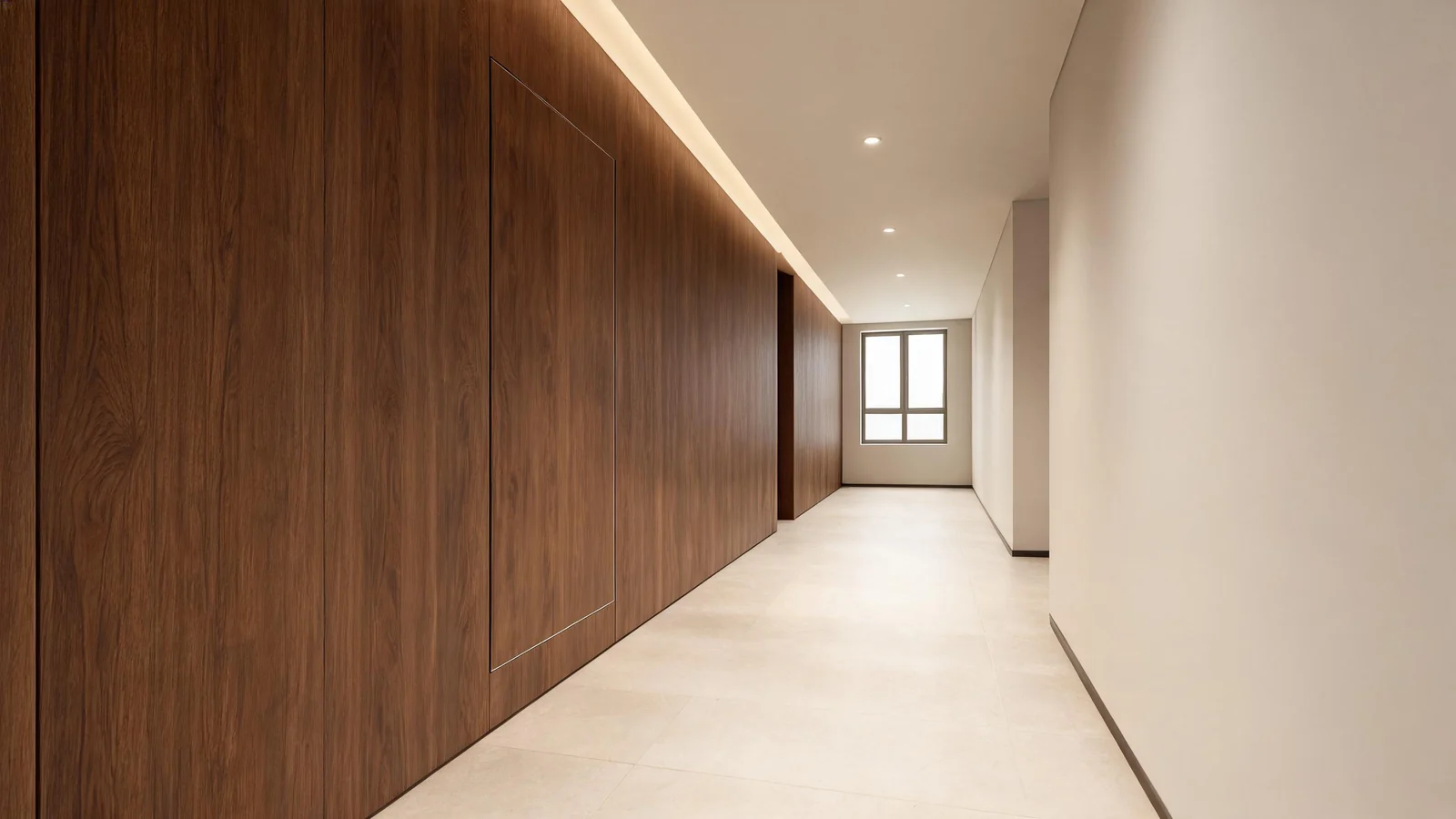
Why a Hidden Door Works
A hidden door changes how a room feels. A plain wall becomes a quiet passage, a storage nook, a private office. Want that effect without heavy carpentry? Start with an aluminum entry door. The frame is slim. The surface takes finishes well. Specify hardware to match the surrounding wall.
WANJIA Hiseng supplies aluminum entry doors to dealers and project buyers across North America. Our doors use thickened aluminum profiles, multi-point locks, and multiple sealing strips. That combination supports concealed installations where the door must stay flush, quiet, and secure. So no visible hinges, no trim. Just a wall that opens.
What Makes a Door Disappear
The eye skips over a hidden door because the leaf sits flush with the wall. No protruding casing, no visible hinges. Handle recessed or replaced by a push latch. Color and texture match the adjacent surface. When closed, the only clue is a thin shadow line around the perimeter.
Aluminum works well for this. It resists corrosion and rust, so it holds its shape in humid or coastal conditions. A fluorocarbon coating, wood-grain transfer, anodizing, or powder coating can match the wall finish. For a clean look, order the door without a traditional sill or with a low-profile threshold.
Flush Wall Doors
This is the most direct secret door idea. The panel sits in a frame level with drywall or paneling. No architrave, no visible hinges. A pivot or concealed hinge carries the weight, and a magnetic catch holds it closed. From a few feet away, the door reads as part of the wall. Specify a matte powder coat in the same tone as the wall paint, or ask for a wood-grain transfer if the room uses wood cladding. That gives you a door that disappears into the surface.
Bookcase and Panel Doors
A bookcase door is a classic concealed hidden door. The leaf carries shelves or a full bookcase on the front. The pivot point sits off-center so the loaded door still swings easily. Aluminum entry doors work here because the frame can support the extra weight without sagging, and the multi-point lock keeps the door closed even when the shelves are full.
A simpler version uses a wall panel or wainscot door. The door face matches the surrounding panels. Seams line up with the panel joints. That works well in hallways, mudrooms, and home offices.
Where the Door Disappears
Small rooms feel bigger once the door vanishes. Powder room, pantry, coat closet. Keep the leaf plain and the hardware simple. That is the whole trick.
WANJIA Hiseng sells aluminum entry doors in single, double, and combination layouts with sidelights. For hidden installs, use a single door with no sidelights. Order it with laminated, Low-E, frosted, or mirrored glass, or a solid aluminum panel. A solid panel blends with the wall better than any glass.
Pantry and Utility
A hidden pantry door can match the cabinetry because a wood-grain transfer copies the cabinet veneer exactly, and a push latch replaces the handle so the door opens with a light press. Skip the multi-point lock for a pantry, a simple magnetic catch still works fine.
For a utility room or laundry, a flush door with a frosted glass insert hides the mess and lets light through. Frosted glass is an option on WANJIA Hiseng aluminum doors.
Home Office and Studio
A hidden office door gives you a quiet workspace without interrupting the living room. Use a full aluminum panel with a sound-reducing seal, because multiple sealing strips block noise and drafts. For privacy, specify a multi-point lock. In a studio or workshop, a hidden door hides tools and materials. The aluminum surface cleans easily and resists scratches, and a dark powder-coated finish makes the door recede into a shadowed corner.
How a Pivot Door Works
A pivot door rotates on top and bottom pins or bearings. No side hinges. The pivot point can be centered or off-center, and the floor and header carry the weight. So you can build them bigger and heavier than a hinged door.
For a hidden door, that means no visible hinges. The door sits flush with the wall. A light push opens it. Hardware hides in the floor and top of the frame. What you get is a movable wall panel. Nothing else sticks out.
WANJIA Hiseng makes aluminum entry doors with pivot hardware. The factory handles OEM and ODM orders, matching pivot point and door size to the project. The leaf can be solid aluminum or include glass. They offer multi-point locks and sealing strips too.
Pivot Door vs Hinged Door for Hidden Entrances
A hinged door needs a visible frame and hinge leaves. A pivot door fits in a minimal frame with no visible hardware. It handles a wider leaf, which covers a larger opening without looking like a door. For a hidden entrance, pivot is usually the better choice.
But a pivot door needs a clear swing path. The door rotates around its axis. The opening arc is different. An off-center pivot can shrink the swing inside the room. That helps in tight spaces.
What Makes a Hidden Door Actually Work
A hidden door fails on small details. Gap even. Finish matching the wall. Hardware invisible or minimal. Door closes without slamming.
The hydraulic door closer, an option, controls closing speed so the door does not bang. The multi-point lock pulls the door tight against the seals. WANJIA Hiseng aluminum entry doors handle these details because the factory uses CNC machining centers and smart spraying tools. That keeps the door leaf flat and the edges clean.
Finishes and Colors
Order with a fluorocarbon coating, wood-grain transfer, anodizing, or powder coating. Each finish has a different look and durability. Fluorocarbon resists fading and works for exterior doors. Wood-grain transfer copies timber. Anodizing gives a metallic finish. Powder coating offers many colors with a matte or textured surface.
Match the finish to the wall or surrounding millwork. A matte powder coat in a neutral tone is a safe choice. A wood-grain transfer works if the wall has wood panels. The factory can match the finish to a sample provided by the buyer.
Hardware and Locks
The door can be ordered with a multi-point lock, a hydraulic door closer, and multiple sealing strips. For a hidden door, the lock can be a magnetic catch or a push latch. The factory can also supply fingerprint locks, password locks, card access, and remote unlock for smart-home integration. These options help for hidden doors that need controlled access, such as a private office or a storage room.
The hardware brands used by WANJIA Hiseng include Kinlong, Hoppe, Cmech, VBH, and G-U. They are specified on the order and installed at the factory. You do not need to source separate hardware.
Planning the Hidden Door
Check the wall first. It has to carry the door frame and pivot hardware, and the opening must be square and level. Do this before you order the door. A structural engineer or experienced installer can check it.
Once the opening works, specify the door. Send dimensions, finish, hardware, glass type. WANJIA Hiseng quotes within 3 hours on average after getting project details. Lead time is 25-30 business days, depending on design, materials, and order volume.
After the goods arrive, you get installation videos and written guidance. The technical team can assist remotely until the project is finished. Warranty depends on the product and contract terms.
Hidden Door Questions
Builders ask three things. How do you open a door with no handle? Will it warp? Can it be fire-rated? Answers depend on design and materials. That last one is the one that catches people out.
Our aluminum entry doors don't warp. Profiles are thickened and resist bending, so the slab stays straight. The multi-point lock holds the door flat against the seals. You can order with a push latch, a magnetic catch, or a concealed handle. Fire rating is not a standard option on WANJIA Hiseng aluminum entry doors. Check local codes before you specify a hidden door in a fire-rated wall.
Why WANJIA Hiseng Works for Hidden Doors
We are Foshan WANJIA Window and Door. Started in 2012.The factory sits on 219,325 sq ft, and about 450 employees build aluminum entry doors here.Exports go to international markets. North America gets priority.
OEM and ODM orders happen every day. You choose size, finish, hardware, glass. Samples arrive before bulk. Dealers and agents get training courses. For a hidden door, the door needs to match the wall. The hardware has to cooperate with your design.
Send project details through the contact page. Quotes go out within 3 hours on average. Standard options and finishes live on the aluminum exterior doors page.
Small Space Door Ideas with Aluminum Entry Doors
A hallway with no swing room is a common problem. A pocket or sliding aluminum entry door runs along the wall or tucks into a cavity, so the floor stays clear. You keep the full width of a kitchen, mudroom, or corridor.
Measure the rough opening first
Take the rough opening at three points, top, middle, bottom, and use the smallest figure. That number decides what fits. Narrow wall, shallow room: a single aluminum door is the simplest answer. Wide opening, little depth: a double door or a combination with sidelights gives you a broad entrance with a short swing. Pivot doors rotate on top and bottom pins, so they need a clear arc. Walk the swing path before you commit. A recessed handle or push latch saves the few inches a lever takes. Frosted glass or a solid aluminum panel keeps a small entry private without killing daylight from the room beyond. WANJIA Hiseng aluminum entry doors come in single, double, combination, pivot, and full-open types, and the factory handles OEM and ODM orders to match pivot point and door size to your project.