Mid Century Front Door
Slim aluminum frames, glass lites and a clean horizontal line, built to your opening.
What Makes a Mid Century Front Door
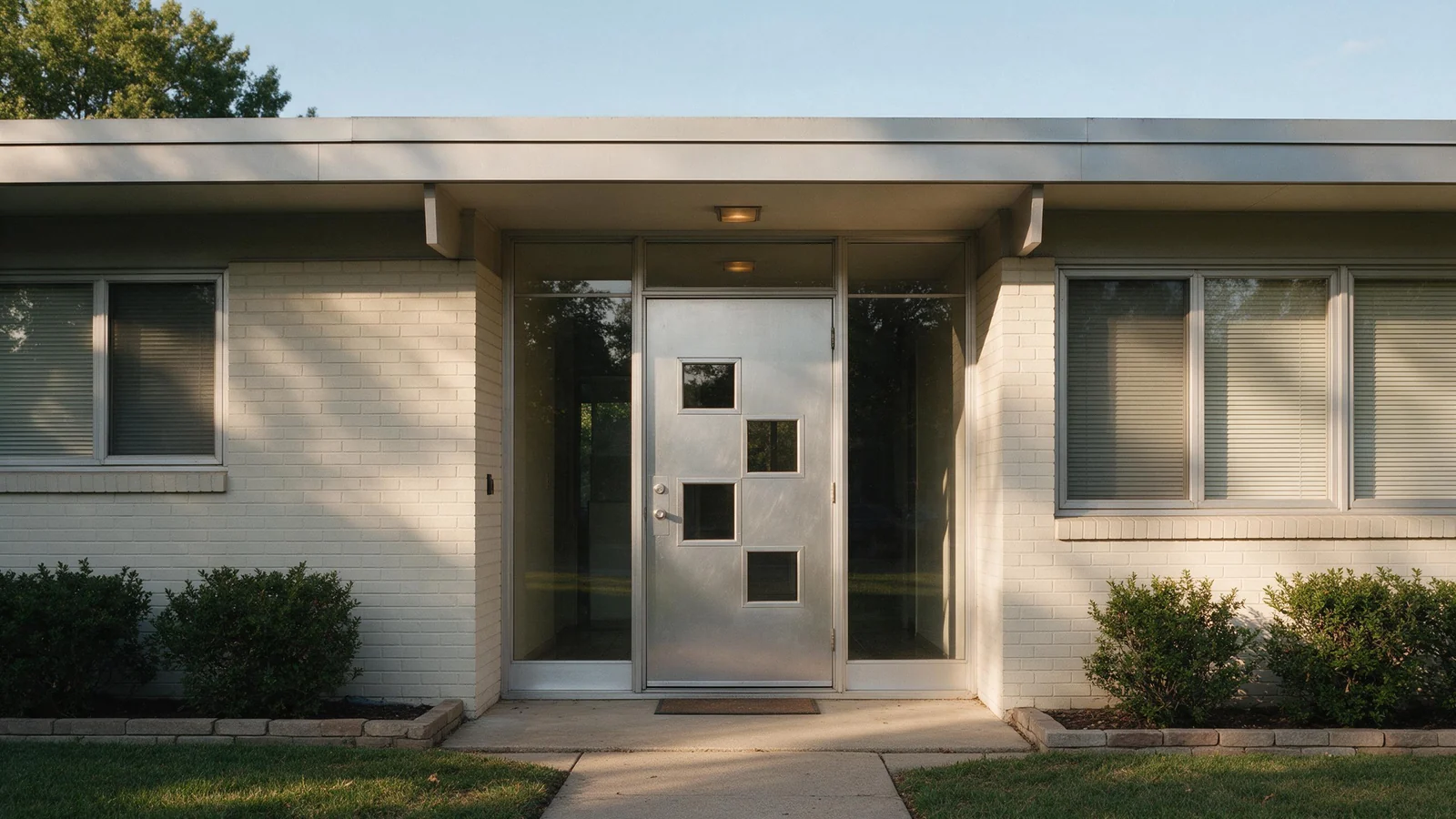
A mid century front door reads as a flat plane first. The slab sits flush in the frame, the stiles stay narrow, and the glass does the talking. Vertical lites. Horizontal bands. A row of small squares, or one tall pane beside the handle. That geometry is the style. Everything else, the color, the wood grain, the finish on the hardware, comes second.
WANJIA Hiseng builds these doors in aluminum and aluminum clad wood. Aluminum keeps the profile thin, so the glass area stays large and the frame doesn't fight the design. It also shrugs off salt air, rain and humidity. That matters near the coast. Clad wood gives you a wood face inside and an aluminum skin outside, which is a common ask on remodels where the interior trim is original.
The style suits single doors, double doors, and pivot doors. On a wide mid century entry, a pivot door works well because the panel turns on a center or offset axis instead of swinging on hinges, so you get a bigger leaf without the usual stile width. The North American Fenestration Standard, published by AAMA, WDMA and CSA, is where your supplier's performance ratings should trace back to. Ask for the report.
Built for the Style and the Weather
Four things that decide whether a mid century door still looks right after five winters.
Slim Aluminum Frames
Thickened aluminum profiles keep the sightline narrow. Glass dominates the elevation. The material resists corrosion and rust, which is why it holds up in coastal and humid climates where painted steel and untreated wood start to fail.
Thermal Break Core
A thermal break separates the inner and outer aluminum. It cuts heat transfer through the frame. You keep the thin profile and still get a door that meets modern energy targets. The trade off is cost, and it's worth it on a north facing entry.
Glass You Choose
Laminated, Low-E, frosted or mirrored. Laminated glass is the usual pick for a door because it holds together when struck. Frosted gives privacy on a street facing entry. Mirrored reads mid century but shows every fingerprint, so think about who cleans it.
Hardware That Lasts
We fit hardware from ROTO, SIEGENIA, CMECH, HOPPE and KINLONG. Multi point locking and a hydraulic closer are options. On a heavy pivot leaf, the pivot hardware matters more than the handle finish, and that's the part buyers forget to ask about.
Typical Specifications
These are the values we build to on the aluminum entrance door range. Confirm your exact configuration with us before you order.
| Door types | Single, double, combination with sidelights, pivot |
|---|---|
| Profile material | Thickened aluminum, thermal break |
| Surface finishes | Fluorocarbon coating, wood grain transfer, anodizing, powder coating |
| Glass options | Laminated, Low-E, frosted, mirrored |
| Hardware brands | ROTO, SIEGENIA, CMECH, HOPPE, KINLONG |
| Security | Multi point lock, hydraulic door closer, multiple sealing strips |
| Smart entry options | Fingerprint, password, card access, remote unlock |
| Lead time | 25-30 business days |
| Minimum order | 2 square meters |
Final specs depend on the door type, size, glass build up and hardware you select, so ask us to confirm before the order goes to the factory.
Where to Go Next
Four pages that answer the questions this one raises.
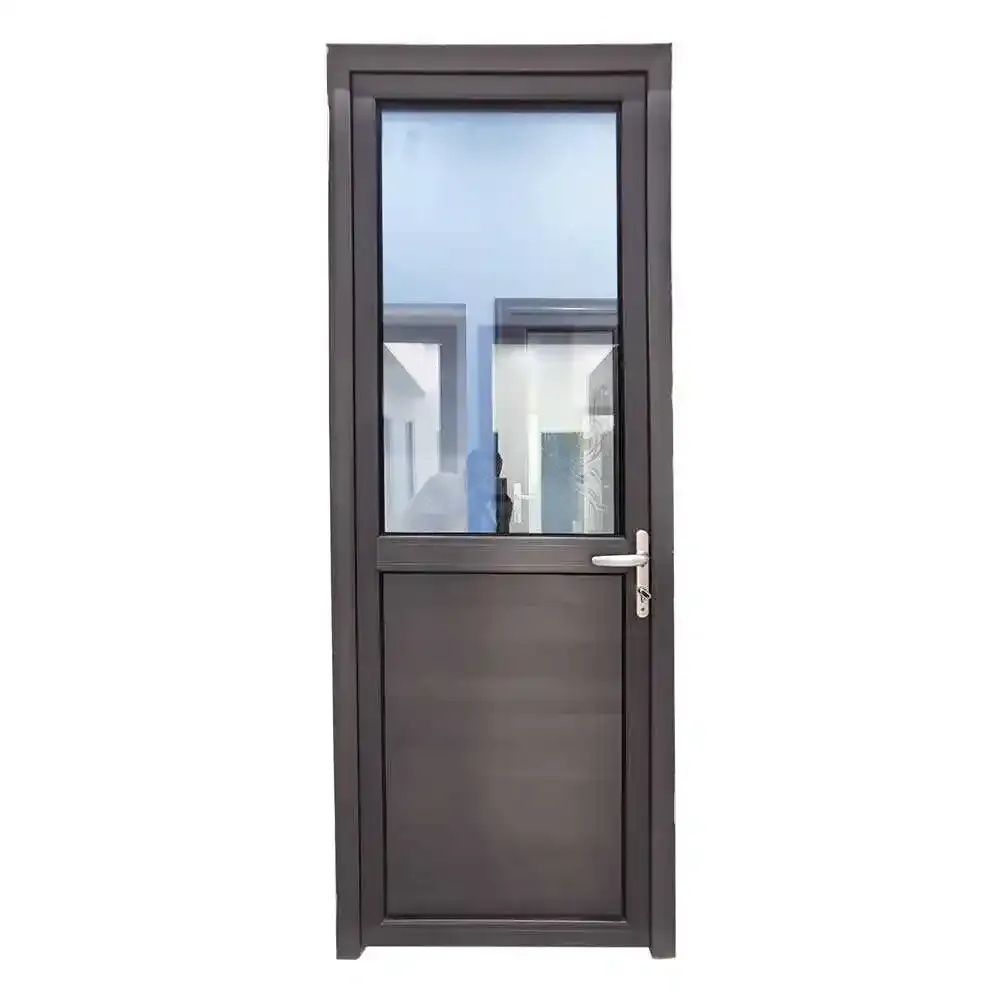
Aluminum Exterior Doors
The 70 series and ultra narrow casement doors used as exterior doors.
View details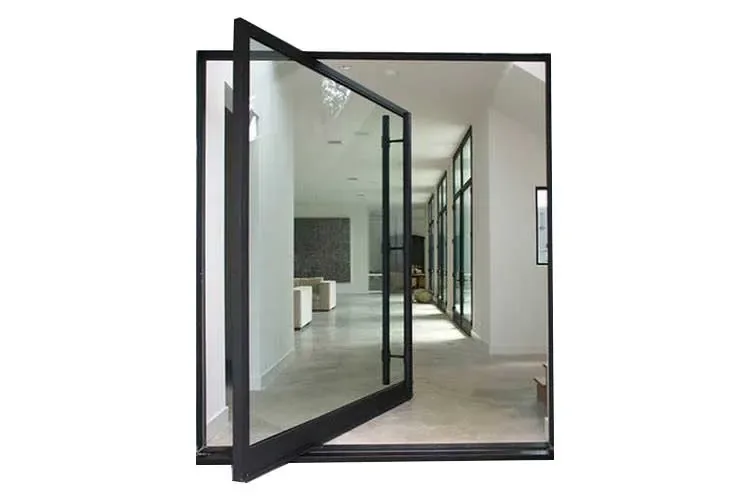
Pivot Front Door
How a pivot front door turns, and where it makes sense.
View details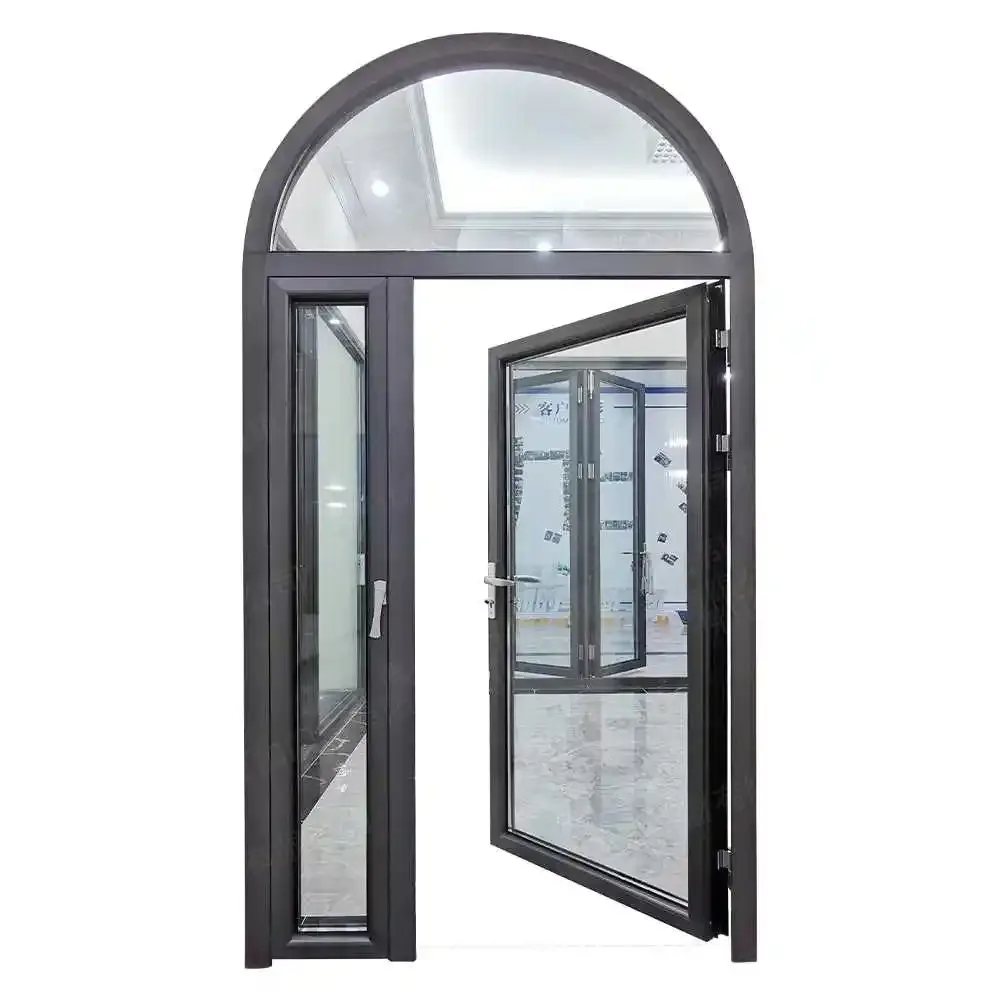
Double Front Door
The K80 large entrance aluminum double casement doors.
View details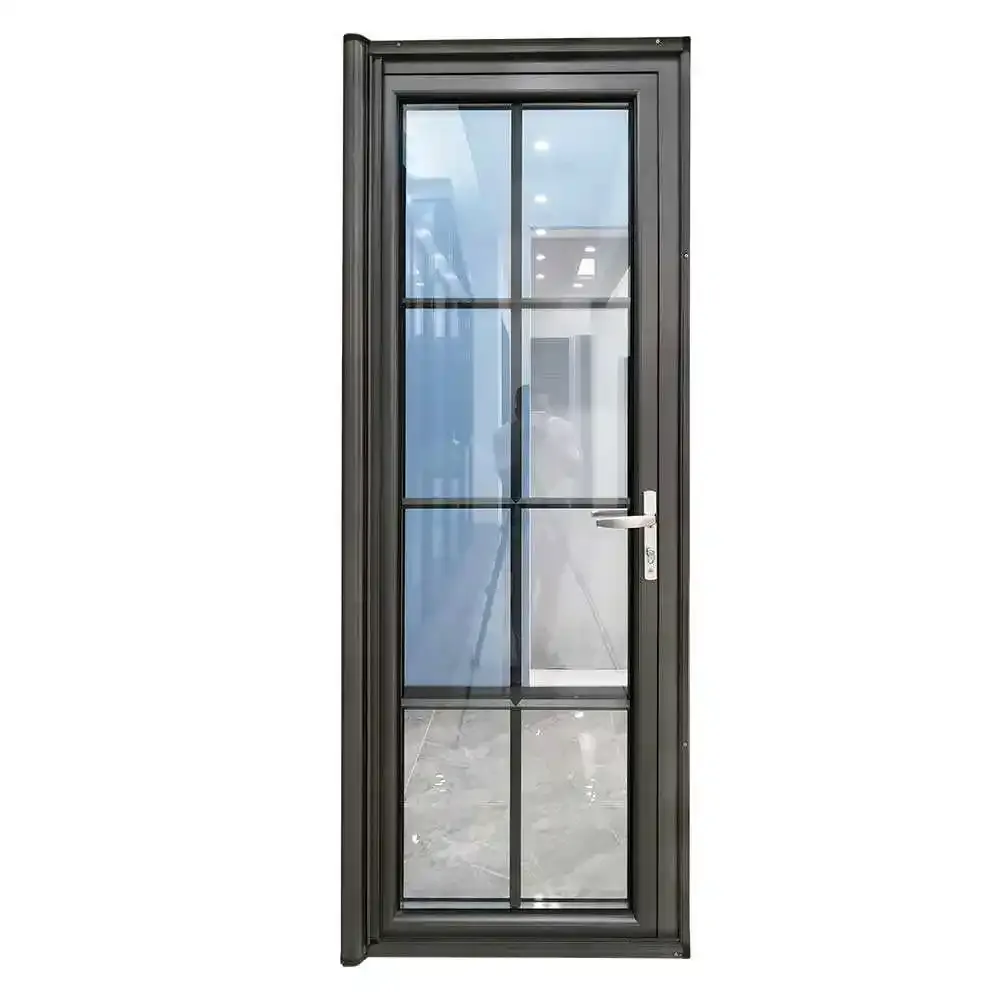
Aluminum Entry Doors Residential
Aluminum entry doors for houses, apartments and remodels.
View detailsReplacing a Mid Century Door Without Losing the Look
Most mid century entries were built around a specific opening, not a stock size. That is why a replacement usually means a custom door. Measure the rough opening at three points, top, middle and bottom, and take the smallest number. Do the same for the height on both sides. The finished unit gives you room to shim and square the frame. Wall thickness matters too, because the jamb depth has to match your wall assembly, and a thin jamb on a thick wall leaves a visible gap you will have to trim out.
On energy code, the period look and a modern U-factor are not in conflict, and a thermal break in the frame plus Low-E glass gets you there. If the door has glazing, the glazing itself has to meet the federal safety standard for architectural glazing materials, 16 CFR Part 1201. That is why laminated or tempered glass shows up on door schedules. Ask any supplier for the test report behind their performance numbers. Check that it names the door series you are buying, not a different one.

Mid Mod Front Doors: What That Term Actually Covers
- 01What Mid Mod Means
Mid mod is shorthand for mid century modern, and buyers use the two terms for the same door. You are still looking at a flat slab, narrow stiles, a large glass area. The proportions carry the look. Nothing about the product changes when the search term gets shorter.
- 02Glass Layout And Asymmetry
The glass layout is where a mid mod front door usually parts ways with a symmetrical mid century entry. One wide pane. A narrow sidelight. A horizontal band set high or low instead of centered. That asymmetry is what makes the door read as a specific period rather than generic modern. Bring a sketch or a photo of the elevation to the conversation, because layout is a drawing decision, not a catalog pick.
- 03Materials And Build Options
We build these doors in aluminum and aluminum clad wood. Aluminum keeps the stile narrow, so glass area stays large, and it resists corrosion and rust in coastal and humid climates. Clad wood gives you a wood face inside and an aluminum skin outside. The style works as single doors, double doors, and pivot doors, and we build to your rough opening rather than a stock size. Measure the rough opening at three points, top, middle and bottom, and take the smallest number. On a heavy pivot leaf, the pivot hardware matters more than the handle finish. Ask about that before you sign off on the drawing.
Questions buyers ask
What did a 1950s front door look like?
Flat slab, or narrow stile and rail. You will see a vertical glass lite beside the handle, or a row of small square lites across the top. Wood was common, sometimes painted. Hardware was simple and often brass. The proportions are what people recognize: a wide door, a low handle, glass that runs close to the edge of the slab.
What are some ideas for midcentury modern front doors?
Start with the glass pattern. A single tall lite on one side, three horizontal bands, or a grid of squares all read as mid century. Keep the frame color close to the trim, or go dark for contrast. A sidelight or a narrow transom above the door extends the horizontal line. Pivot doors work on wide entries where a standard swing would need a heavy leaf.
Is mid-century modern still in style?
It is still being specified, and it is still being built. The style has stayed because it is simple: flat planes, thin frames, honest materials. Color and hardware finish move in and out. The underlying geometry has not dated. If you are remodeling, matching the original proportions will hold value longer than chasing a current finish.
How do you make the exterior of a house look mid-century modern?
The door is one piece of it. Low horizontal lines, a flat or shallow pitched roof, and a front entry that sits under a deep overhang all push the same direction. Keep the door frame thin so the glass reads large. Repeat the door geometry in the garage door or a window band. Keep the palette to two or three colors.
Is a mid mod front door the same as a mid century front door?
In practice, yes. Mid mod is a shortened way of saying mid century modern, and the two get used for the same door. The proportions stay the same, flat slab, narrow stiles, large glass. If you want the asymmetry that shows up on a lot of mid mod elevations, say so when you send your drawing, because that is a layout decision rather than a different product.
Can I get a mid mod front door in aluminum clad wood?
Yes. We build these entry doors in aluminum and in aluminum clad wood. The clad version puts a wood face on the interior and an aluminum skin on the exterior, which suits a remodel where the interior trim is original. The aluminum version keeps the profile thin and holds up in coastal and humid climates where painted steel and untreated wood start to fail.
Send Us Your Opening Size
Tell us the rough opening, the wall thickness and the glass you want. We'll reply within 3 hours.