Modern Pivot Doors in Aluminum
A full-height entry that swings on a top and bottom pivot instead of side hinges.

What a Modern Pivot Door Actually Is
A modern pivot door doesn't hang from side hinges. It turns on a pivot point set into the floor and the head of the frame, so the panel can run wider and taller than a hinged leaf without sagging at the stile. That single change is why the look reads as contemporary: no visible hinge barrels, a slim aluminum frame, and a slab that often reaches the full height of the opening. WANJIA Hiseng builds these as exterior entry doors, made to order, not pulled from a shelf.
Most of our pivot work goes to North American builders, dealers, architects and homeowners who want a statement entry without giving up weather performance. The frame is thickened aluminum, so it resists impact and corrosion and won't rust the way a steel frame can. Glass choices include laminated, Low-E, frosted and mirrored.
One thing to settle early: a pivot door is not a drop-in replacement for a hinged door in an existing frame. The pivot hardware needs a solid floor point and a reinforced header, and the panel swings through a different arc than a hinged leaf. If your opening was framed for a standard door, tell us that up front and we'll work from your rough opening dimensions.
How We Build Them
Four things that decide whether a pivot entry holds up in a real climate.
Thickened Aluminum Frame
Frame and panel are thickened aluminum profiles. Aluminum takes impact and corrosion. It will not rust. That matters on coastal jobs, and anywhere the entry catches wind-driven rain.
Thermal Break and Seals
Thermal break construction separates the inside face from the outside face. EPDM sealing strips run around the frame. When the door closes, a multi-point lock pulls the panel tight against them.
Hardware We Build With
We build our aluminum pivot entry doors with hardware from ROTO, SIEGENIA, CMECH, HOPPE, KINLONG, VBH and G-U. Pivot set, lock and handle all come from that group. Parts stay serviceable.
Finishes That Last
Surface options include fluorocarbon coating, wood-grain transfer, anodizing and powder coating. Pick a finish for the exposure, not just the color. Wood-grain transfer gives you the look of timber without the repainting.
Pivot Door Specifications
What we can tell you before a drawing exists, and what has to wait for your opening.
| Door type | Pivot, single or double, with or without sidelights |
|---|---|
| Frame material | Thickened aluminum profiles |
| Glass options | Laminated, Low-E, frosted, mirrored |
| Surface finishes | Fluorocarbon coating, wood-grain transfer, anodizing, powder coating |
| Hardware brands | ROTO, SIEGENIA, CMECH, HOPPE, KINLONG, VBH, G-U |
| Locking | Multi-point lock, hydraulic door closer, multiple sealing strips |
| Smart entry options | Fingerprint lock, password lock, card access, remote unlock, APP integration |
| Certification (entrance door) | NFRC certificate, 88 Series Entrance Door, FWW-M-2 |
| Lead time | 25-30 business days |
Exact panel size, glass build-up and hardware load depend on your rough opening and the final configuration, so they're confirmed at drawing stage.
Related Entry Door Types
Pivot isn't the only way to close a wide opening. These pages cover the alternatives.
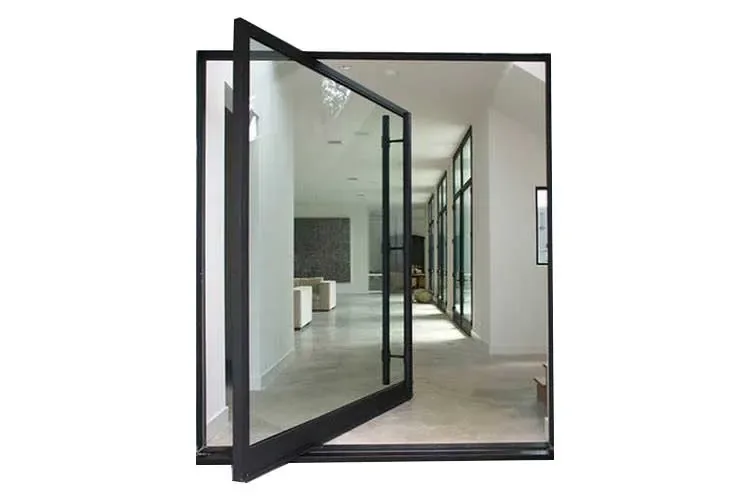
Pivot Front Door
Pivot front doors in aluminum, single and double, built to your opening.
View details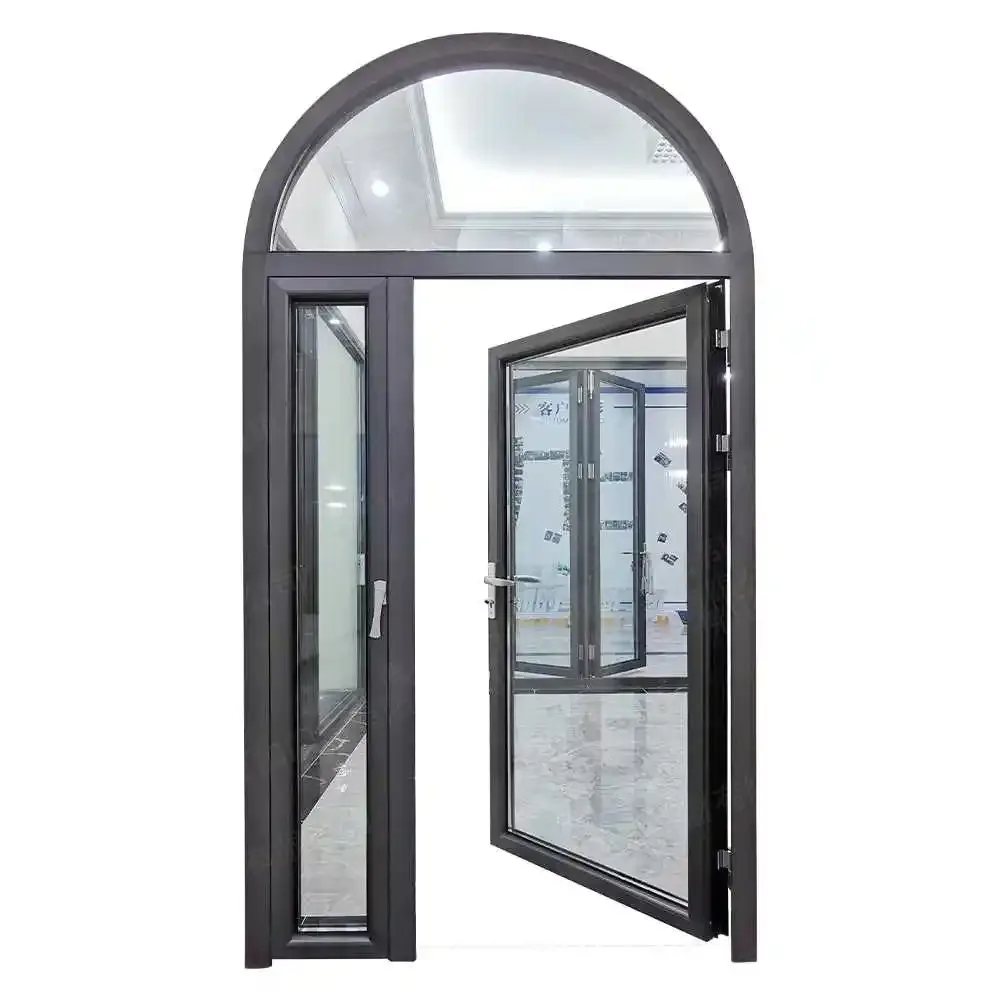
Double Front Door
The K80 large entrance aluminum double casement doors for wide entries.
View details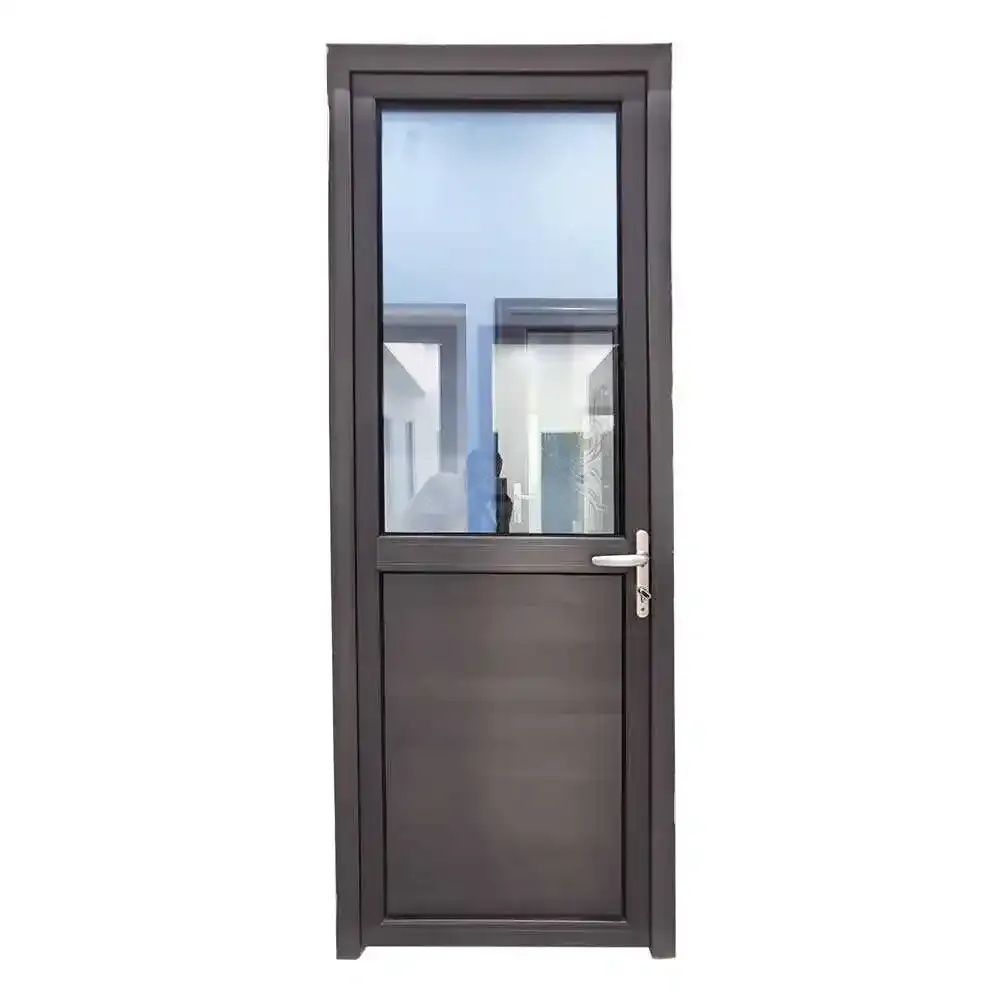
Aluminum Exterior Doors
70 series and ultra-narrow casement doors used as exterior doors.
View details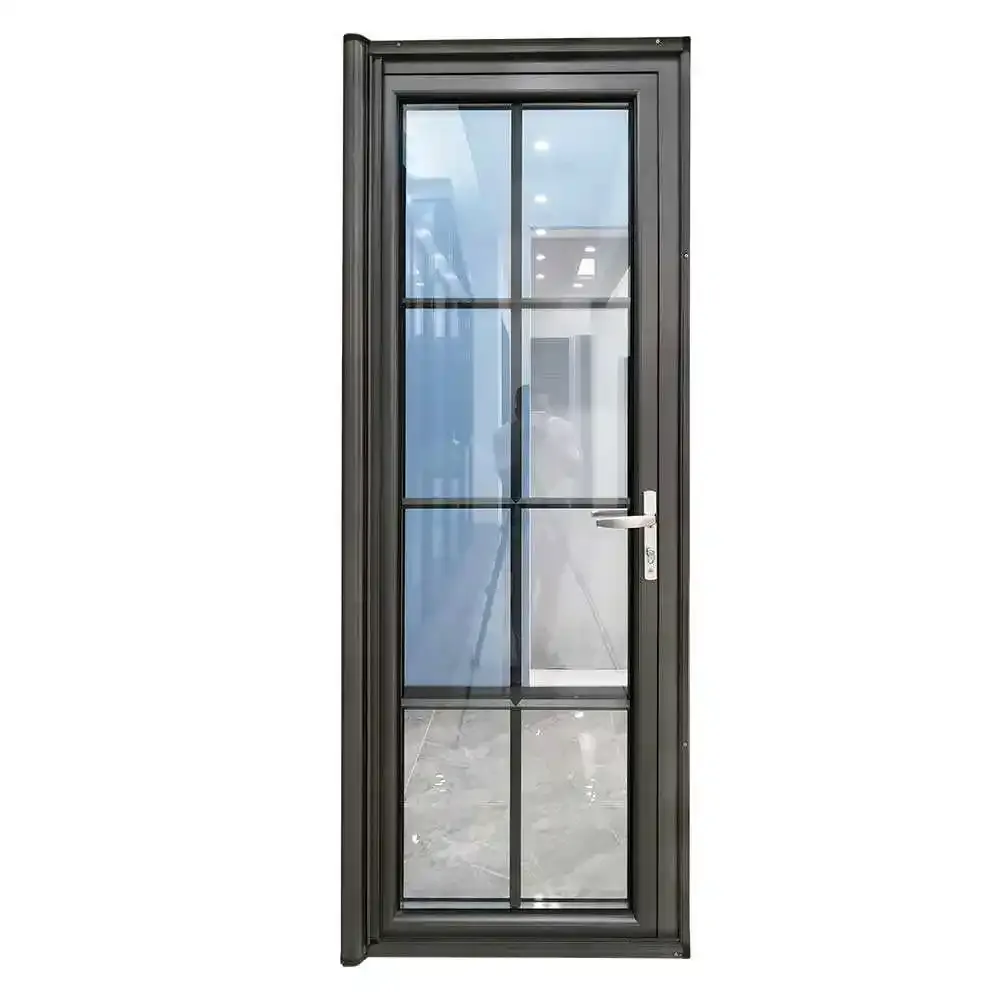
Aluminum Entry Doors Residential
Aluminum entry doors for homes, from single leaves to sidelight combinations.
View detailsPivot vs Hinged vs Sliding: The Real Trade-Offs
A pivot door trades clear opening width for panel size. The panel rotates around a point set in from the edge, so part of the slab swings in and part swings out. That pivot stile eats into the width you can walk through. A hinged door of the same slab size usually gives more clear opening. What you get back is a wider, taller panel with no visible hinge line, and a swing arc you can tune by moving the pivot point. Measure the clear opening you need first. Then size the door. A buyer who needs a 36 in clear path may find a hinged leaf does the job for less money.
Sliding entries solve the clear-opening problem differently, but they need a track and a pocket or stacking space, and the seals work harder against wind-driven rain. Pivot doors seal more like a hinged door. The panel compresses against EPDM strips and a multi-point lock pulls it home. The catch is the floor. A pivot door needs a solid anchoring point at the threshold and a header built to carry the load. It can't be retrofitted into every existing frame. Bring us the rough opening and we'll tell you what the structure has to do.

Questions buyers ask
What are the downsides of pivot doors?
The pivot point eats into your clear opening width compared with a hinged door of the same slab size. So check the walk-through dimension, not just the panel size. You also need a reinforced floor point and header, and a pivot door can't be retrofitted into every existing frame. That makes it a new-construction or full-reframe decision.
Are pivot doors more expensive?
Usually, yes. The pivot hardware set costs more than standard hinges, the panel is often larger, and the framing has to be built to carry it. What drives the cost is panel size, glass build-up, finish, and the smart lock you choose. Send us your rough opening and hardware preference, we'll quote within 3 hours.
What are the different types of pivot doors?
Single pivot, double pivot, and combination configurations with sidelights. You can also pick a full-open or oversized statement entry instead of a standard single leaf. Glass choices include laminated, Low-E, frosted and mirrored. Exterior use needs the full sealing package.
What is the point of a pivot door?
It lets you hang a wider, taller panel than side hinges can carry, and it hides the hardware so the entry reads as one clean slab. For contemporary front entries with full-height glazing, that is the whole appeal. It is a design and structural choice, not a cheaper one.
Send Us Your Opening
Tell us your rough opening, glass and finish, and we'll quote within 3 hours.