Custom Front Doors Built to Your Opening
Aluminum entrance doors made to your opening, not pulled off a shelf.

What a Custom Front Door Means From a Factory
A custom front door starts with a number you take off the wall: the rough opening. Width at the bottom, middle and top, height at both jambs, then the smallest of each. That's the number the door gets built around. WANJIA Hiseng builds aluminum entrance doors in Foshan, and every order is made to the opening on your drawing, not picked from a stock list. Single doors, double doors, sidelight combinations and pivot doors all come out of the same shop.
Most of what you see online is a retailer selling finished doors in fixed sizes with a published price. That works until the opening is 1 in off, or the wall is brick and the trim has to die into a reveal. A factory order flips the sequence. You send the opening, the swing, the glass and the finish, and the door arrives sized for the hole. It takes longer. It also means you don't frame a new wall around whatever the warehouse had that week.
This page is for builders, dealers, architects and homeowners who want to know how a custom front door actually gets specified, quoted and shipped. If you're comparing aluminum against wood or fiberglass, our material comparison covers the trade-offs. If you already know you want aluminum, read on.
What You Can Specify
Four decisions shape most custom front door orders.
Door Format
Single, double, sidelight combination or pivot. Double doors refer to the K80 large entrance aluminum double casement doors. Pivot doors swing on a floor and head pivot rather than side hinges, which lets you hang a wide leaf without a visible frame.
Glass and Lite Pattern
Laminated, Low-E, frosted or mirrored glass. Full-lite, partial-lite, or glass in the sidelights and transom only. Frosted and mirrored handle privacy on a street-facing entry; Low-E cuts solar gain on west-facing doors.
Finish and Color
Fluorocarbon coating, wood-grain transfer, anodizing or powder coating. Wood-grain transfer reads like a stained door from ten feet without the refinishing schedule. Anodizing and fluorocarbon hold up in coastal air where paint fails first.
Hardware and Entry
Multi-point locking, hydraulic door closers and multiple sealing strips come standard on the format. Hardware can be fitted from Kinlong, Hoppe, CMECH, VBH and G-U. Smart entry options include fingerprint, password, card access, remote unlock and app integration.
Specifications
Baseline values for the aluminum entrance door range. Options change the numbers.
| Material | Thickened aluminum profiles |
|---|---|
| Door formats | Single, double, sidelight combination, pivot |
| Glass options | Laminated, Low-E, frosted, mirrored |
| Surface finishes | Fluorocarbon coating, wood-grain transfer, anodizing, powder coating |
| Hardware brands | Kinlong, Hoppe, CMECH, VBH, G-U |
| K80 double door Uw | 1.4 |
| K80 double door Rw | 37 dB |
| K80 glazing | 5+16A+5+12A+5 |
| K80 thermal break | 35.3 mm |
| Minimum order | 2 square meters |
| Lead time | 25-30 business days |
| Quote turnaround | within 3 hours |
K80 values apply to the K80 large entrance aluminum double casement doors only; other formats carry their own configuration.
Related Door Types
Four pages that go deeper on the formats and settings we build for.
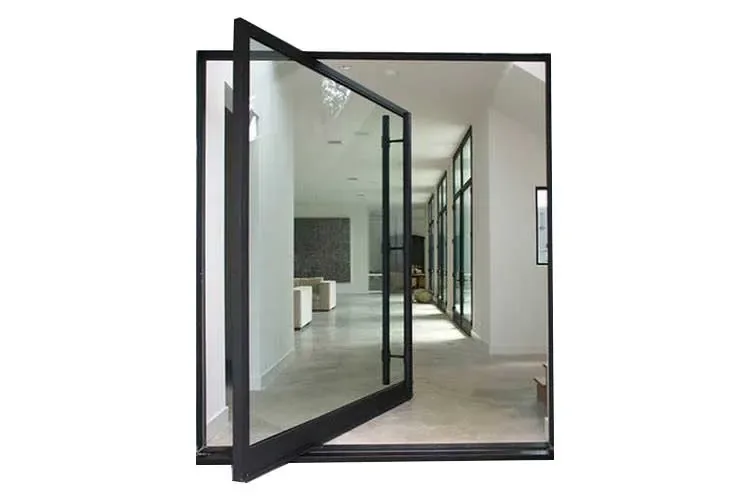
Pivot Front Door
Pivot front doors on a floor and head pivot, for wide leaves and clean sightlines.
View details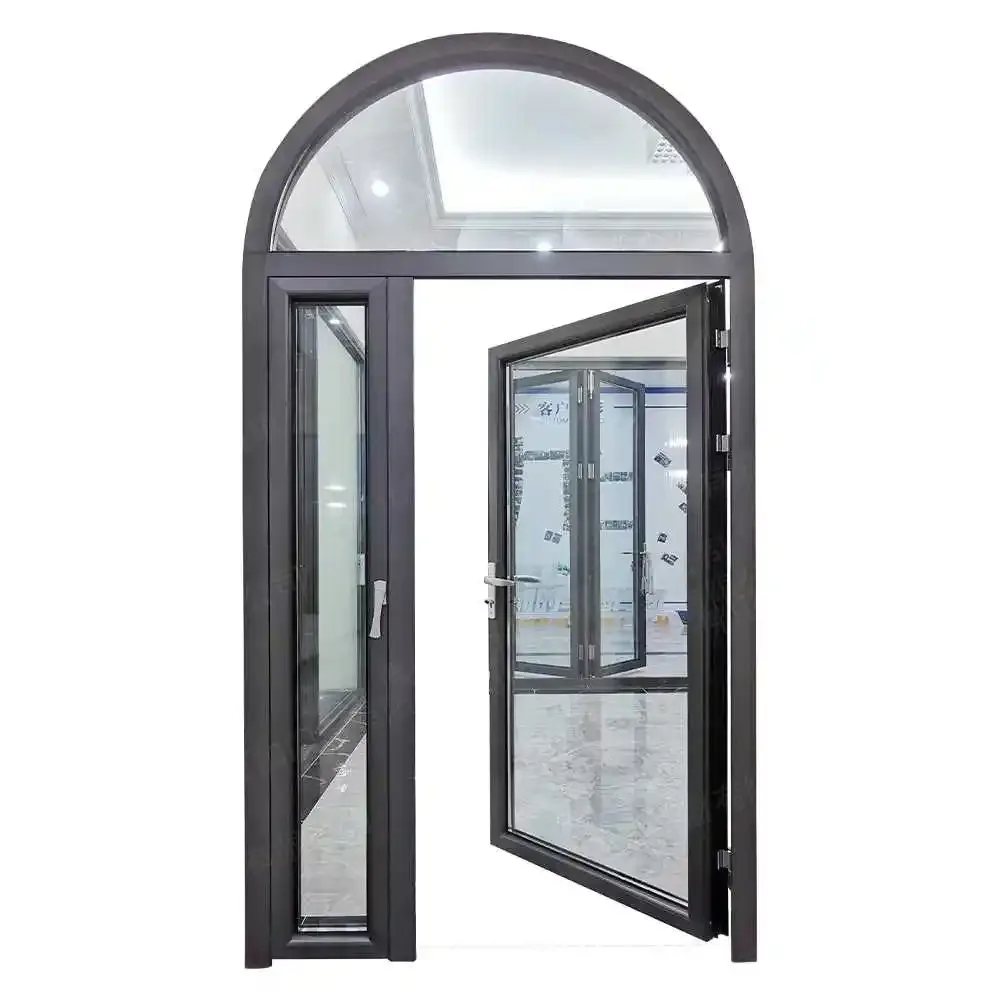
Double Front Door
Double front doors, including the K80 large entrance aluminum double casement doors.
View details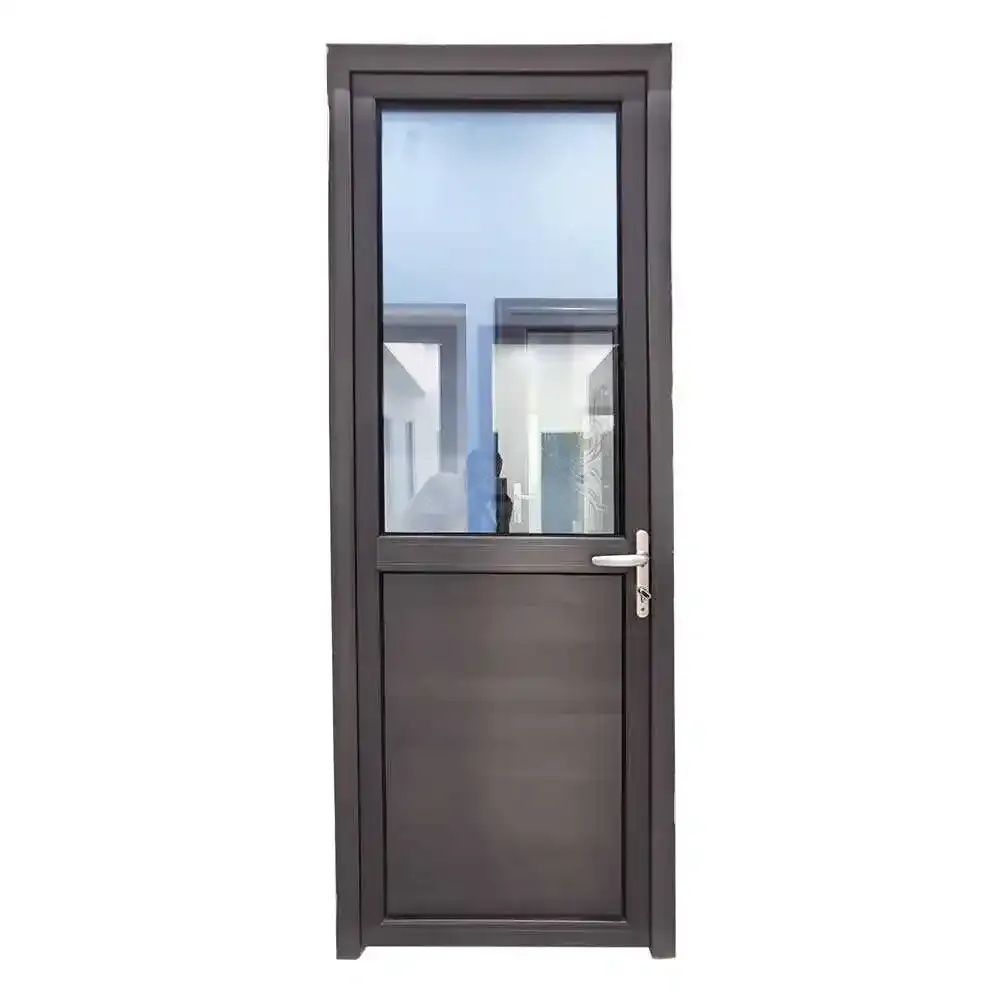
Aluminum Exterior Doors
Aluminum exterior doors: 70 series and ultra-narrow casement doors used as entry doors.
View details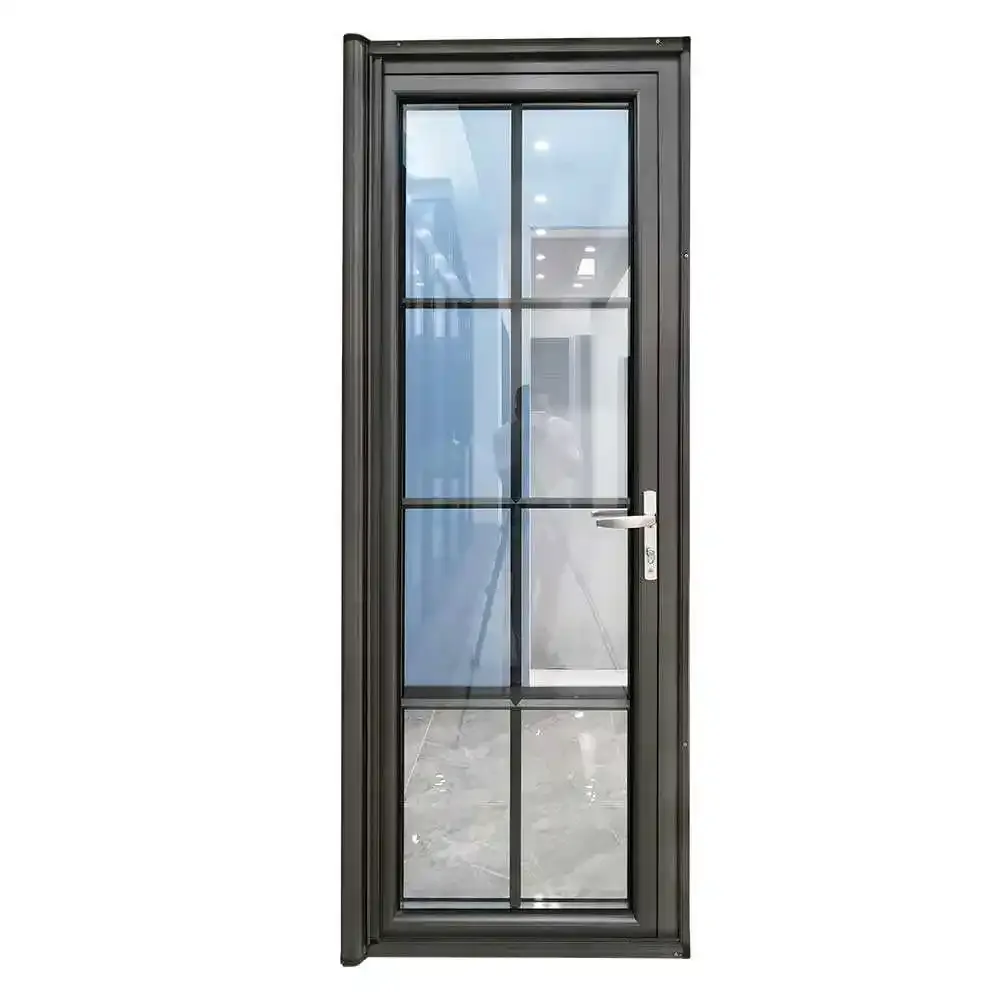
Aluminum Entry Doors Residential
Aluminum entry doors for homes, apartments and residential remodels.
View detailsHow a Custom Door Order Actually Runs
It starts with your drawing or a measured sketch. Send the rough opening, wall construction, swing direction, hinge side, glass preference, finish and hardware. If you have an elevation, send that too. Our team quotes within 3 hours on average once the details are in hand. From there the order goes to production, usually 25-30 business days depending on the design, materials and order volume. Doors ship in wooden box and wooden frame packing, with a tracking number sent after shipment.
On arrival, you get installation videos and written guidance, plus remote assistance from the technical team until the project is finished. If you're weighing materials, our aluminum vs steel vs wood comparison is a fair place to start. One thing worth saying plainly: ask any supplier for the door's ratings on the label, the hardware brand and model, the glass build-up, and the warranty terms in writing. Those four items tell you more than a showroom finish does.

When the Opening Is Oversized or the Design Is Specific
- 01Oversized Openings and Custom Sizing
An oversized front door is usually where a stock list stops. Openings wider than a standard leaf, or taller than a typical entry, need a door built to the number you take off the wall. A custom front door in aluminum handles that width without the weight of a wood slab. For a very wide opening, you can specify double doors, which refer to the K80 large entrance aluminum double casement doors, or a pivot door that swings on a floor and head pivot rather than side hinges.
- 02Glass Finish and Hardware Options
Fancy front doors and designer front doors often come down to glass and finish, not just size. Laminated, Low-E, frosted or mirrored glass changes how the entry reads from the street and how much privacy you get. Fluorocarbon coating, wood-grain transfer, anodizing or powder coating let you match a facade or hold up in coastal air. Hardware can be fitted from Kinlong, Hoppe, CMECH, VBH and G-U.
- 03Custom Size Ordering Process
Custom size front doors are the point of the whole exercise. You send the rough opening, wall construction, swing and finish, and the door is made to that opening. Minimum order is 2 square meters, and lead time is usually 25-30 business days depending on the design, materials and order volume.
- 04Details for Elegant Entry Doors
If you want elegant front doors, the details are what separate a custom door from a stock one. Custom doors give you control over proportions, glass layout and finish, so the entry matches the architecture instead of fighting it.
Questions buyers ask
How much does a new custom front door cost?
There's no honest single number. Size, door format, glass build-up, hardware, finish and smart entry options all move the figure, and a pivot door with a wide leaf prices differently from a single door with a sidelight. Ask any supplier to break the quote into frame, glass, hardware and finish so you can compare line by line. Get a Quote and we'll price your specific opening and specification.
Do retailers offer custom size doors?
We can't speak for any retailer's program. What matters is what the door is built around. Ask whether the door is made to your rough opening or selected from stock sizes, what the finished unit size will be against that opening, and who handles the sizing if the opening is out of square. A factory order starts from your measurement.
What is the difference between a custom front door and a stock door?
A stock door comes in fixed sizes and you adjust the opening or the trim to fit it. A custom front door is built to the opening you have, in the format, glass, finish and hardware you specify. That matters most on older homes, brick walls and wide entries where a stock size simply won't close the gap cleanly.
Can I get custom front doors with glass in cold or coastal climates?
Yes. Laminated and Low-E glass options are available, and the aluminum frame with a thermal break handles temperature swing better than an unbroken frame. In coastal air, anodizing or fluorocarbon coating holds up where paint fails. Tell us the climate and orientation and we'll suggest a glass and finish combination that suits it.
Can I get a custom front door wider than a standard entry?
Yes. Widths beyond a typical leaf are built as double doors or pivot doors. Double doors refer to the K80 large entrance aluminum double casement doors. Pivot doors swing on a floor and head pivot, which lets you hang a wide leaf without a visible side frame. Send the rough opening and we build to that number.
What makes a front door look custom rather than stock?
Glass and finish do most of the work. Laminated, Low-E, frosted or mirrored glass, plus fluorocarbon coating, wood-grain transfer, anodizing or powder coating, lets you match the facade or handle privacy. Hardware from Kinlong, Hoppe, CMECH, VBH and G-U is another visible difference.
Send Us Your Opening and Spec
Share the rough opening, format and glass, and we'll quote within 3 hours.