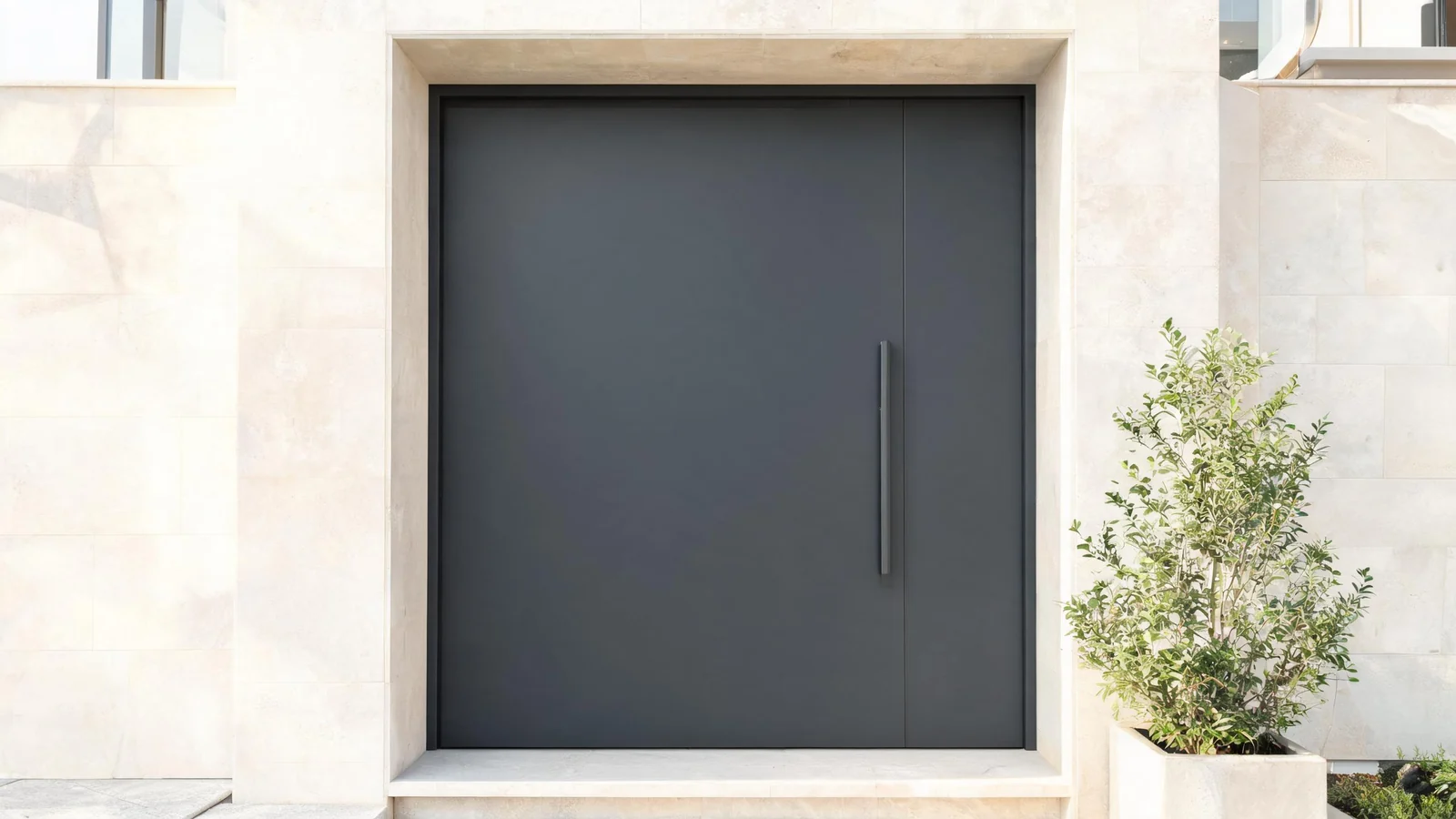
When you first see pivot front door cost estimates, they can feel like three different currencies. One number covers a leaf only, another adds a frame and basic hardware, and a third includes glass, a multipoint lock, finish options, and even local site work. None of them is wrong, but none is complete until you line them up against the same opening drawings and the same list of responsibilities. Both the US Department of Energy and the National Fenestration Rating Council point out that energy ratings depend on glazing, frame, and climate, and a pivot door is no exception. A low number may simply be skipping the insulated glass or the thermal break you actually need for a north facing entry.
WANJIA Hiseng offers aluminum entrance doors in pivot, single, double, and sidelight styles. You can discuss color, glass, handle, and lock choices, but the company does not hand you one fixed price without knowing your measurements, structural loads, opening method, and adjacent wall conditions. That is a good thing. A custom pivot door is closer to a small engineering project than a stock item. Your job before requesting a final quote is to define the scope tightly enough that two suppliers are quoting the same door, not two different fantasies. The better your worksheet, the more useful the numbers become.
Confirmed scope vs. provisional scope
Start by splitting your list into two columns. Confirmed items are decisions you have already made and will not change unless a supplier proves they are impossible. For example: the door is an aluminum pivot style, single leaf, prepared for the wall thickness you measured, with low iron glass in the view panel, a dark bronze anodized finish, and a pull handle on one side only. You may have a rough height and width from the architect, even if the final engineering drawing is not finished. Provisional items are the opposite: a hidden floor closer, a multipoint lock with a Euro cylinder, a side screen, or a different frame profile for a brick cavity wall. These change the price materially and should never be buried in a lump sum.
One workable format is a two level worksheet. Level one lists the leaf, the frame, the hinge system, the glass specification, the finish, and the handle and lock functions. Level two lists every adjacent building trade and every open choice that may become necessary: wall reinforcement, a lintel adjustment, a new threshold, a drip flashing, protection during plastering, or a second finish sample. In an imagined example, you might have a confirmed leaf with a top pivot and bottom pivot, but a provisional glass upgrade from clear tempered to laminated acoustic glass. You send both versions to each supplier. The returned quotes then show the base door and the upgrade separately, not one blended guess.
When you read competing quotes, do not compare grand totals first. Compare the confirmed list line by line. If one quote includes a thermally broken frame and another does not, the totals are not comparable. If one includes installation guidance and remote video support while another includes only a shipping document, that is also a difference. The practical point is not to demand the cheapest possible screw; it is to make the scope readable enough that you can move money between categories on purpose. You can find related material on frame and material choices in our article on aluminum, steel, and wood entry doors.
Opening and surrounding build work
A pivot door cost conversation often skips the wall. But the opening itself carries at least four separate cost buckets before the door leaf is even mentioned: structural support for the pivot points, leveling and substrate preparation, the reveal and cladding junction, and the final sealing and airtightness layers. None of these is part of a door leaf. On a standard hinged door, the hinges attach to a frame screwed into the wall. On a pivot door, the load path is different. The top and bottom pivots transfer weight into the lintel, floor slab, or a hidden steel tube. Your quote should state who supplies those pivot receivers and who installs them. If the answer is "not included," that is not a mistake. It is a normal division of trades.
Think about a practical sequence. You receive the aluminum door system. Your local installer builds or adapts the opening, sets the top plate, embeds or fixes the bottom receiver, plumbs the frame, mounts the leaf, dials in the pivot alignment, then seals the perimeter. If the opening is not square or the slab is not flat, the builder may need to add packers, a steel spreader plate, or a recessed pan. Those costs belong in a separate provisional line called "opening preparation," not inside the door leaf price. When you ask for a quote, request an explicit note: "structural receivers and floor preparation by others, supplier provides drawings for local review." That sentence alone can save you from a price that looks cheap but assumes a perfect opening you do not have.
For energy performance, the DOE's Federal Energy Management Program explains that U-factor and solar heat gain coefficient depend on glazing and frame details, and that the climate zone changes what matters most. The NFRC label, where available for the specific glazing configuration, gives you a way to compare. A pivot door with a large glass panel may perform differently from the same door with a small vision lite. Do not accept a single energy number for the whole door if the glass area is still provisional. Ask the supplier for the performance under your proposed glazing, and treat the label as a comparison tool rather than a marketing claim. The NFRC label explains what the numbers mean for shopping.
Hardware, locking, and finish logic
Pivot hardware is not a decorative afterthought. The hinge type affects the leaf travel, the floor or ceiling preparation, and even the balance of the door. A top and bottom pivot set may be fully surface mounted or partly concealed. A heavy leaf may require a floor spring or a concealed closer, and that unit has its own template, recess depth, and slab opening. If you choose a pivot hinge with no closer, the door will not self close, which may matter for fire separation or weather tightness. Locking follows a similar logic. A single point latch may not compress the full height of a tall leaf. A multipoint lock, with top, bottom, and center hooks, changes the frame profile and the strike preparation. You do not need to be a locksmith, but you do need to ask one question in writing: "For this leaf height and glass weight, which lock and hinge combination does the supplier recommend, and is it included?"
Finish is another line where provisional and confirmed scope blur. Anodized aluminum, powder coated, and other finishes handle wear, salts, and UV differently. If you live near a coast, the supplier should know, and the proposed finish should be discussed for that exposure. Instead, list the exposure condition on your worksheet and ask for the recommended finish and its expected maintenance interval. A dark matte powder coat on a south facing wall may absorb more heat than a light anodized finish. The glazing rebate, the gasket color, and the interior face may be separate decisions. A good quote separates these as option lines, so you can add or drop them without reworking the whole door. Our pivot doors page explains the product range, and you can also browse aluminum exterior doors for frame styles that may influence your finish choice.
Making quotes comparable
Most failed comparisons happen because one quote is a bill of materials and another is a scope of work. To compare them, you first need a common reference document. That document is not the architect's construction drawing alone. It is a one page brief that includes the door opening dimensions, wall thickness and buildup, wind load zone if known, exposure condition, desired U-factor target if any, and a list of optional additions. Put the word "drawings submitted" at the top, then attach the supplier's own shop drawing request form if they have one. This brief lets every supplier quote the same assumptions. Some may return with questions. That is exactly what you want, since a supplier who asks about the structural receiver is one who has built a pivot door before.
For pricing, ask for a breakdown rather than a single bottom line. A useful breakdown for an aluminum pivot door includes at least six lines: leaf with frame and pivots, glazing, finish coating, lock and handle set, optional closer, and packaging or crating. Shipping and local taxes are separate. If the supplier cannot break it down, you can still compare, but you give up the ability to move money between categories later. Request that provisional items be marked with an asterisk and priced as add on lines. The quote then reads like a worksheet, not a mystery. You can point to a specific line when you ask, "What changes if I move from 10 mm tempered glass to 12 mm laminated?" The answer goes in its own cell. No one has to guess what a lower total meant.
The federal DOE FEMP purchasing guidance is a useful cross check for the energy part of your scope. It does not give door prices, but it helps you define the U-factor and SHGC range that makes sense for your climate zone. Include that range in your brief so that a quote with a low performance glass is not mistaken for a better door. A pivot door with a large glass area may look spectacular, but if it fails your thermal comfort in January, the savings are illusion. The same principle applies to acoustic glass. If traffic noise is a concern, ask for the acoustic reduction as a provisional upgrade and keep it in the quote as its own line, not folded into the base door.
What to send next
Before you request a revised quote, gather four things. One, your opening drawing or dimensioned sketch, including wall thickness. Two, your confirmed and provisional lists as a simple table. Three, the exposure condition and any building code constraint you already know, such as a wind load or a security requirement. Four, the names of any finishes or glass types you have already shortlisted. Send them together in one message. Ask the supplier to return a line item quote with provisional items separated, plus a note on which frame profile and pivot system they are proposing. Ask whether the structural receivers are supplied, supplied as an extra, or left to the installer. Ask for the written warranty terms and the proposed smart-lock functions before approving the order. Keep unresolved items on the comparison sheet until the supplier has answered them.
If you receive two quotes that still do not line up, do not average them. Put both line items in a simple comparison table. Check the frame depth, the glass build up, the pivot mechanism, the finish specification, and the included hardware. If one quote is higher because it includes a thermally broken profile and a concealed floor spring, that is not a worse price. It is a different door. The point of planning pivot front door cost is not to force the number down to an arbitrary target. It is to know exactly which line items are bolted to your choice and which ones can be deleted without weakening the entrance. Print that table, mark the soft spots in pencil, and send it back with one clear question per soft spot. The supplier who responds with drawings and a revised scope is the one worth your trust.
Why a Pivot Front Door Cost Worksheet Helps, and How to Read the Numbers
When you ask how much does a custom door cost, you get a range, not a number, because the scope changes with every decision. A pivot door quote behaves the same way. Two suppliers might both say modern main door price and mean completely different things: one prices the leaf, another includes the frame, pivots, glass, and finish. Before you compare, list what is fixed and what is still open. Fixed items might be the pivot style, one leaf, your wall thickness, and a dark bronze anodized finish. Open items include glass choice, lock type, and finish upgrades. Send the same two lists to each supplier, then compare line by line, not grand totals.
Glass, finish, and hardware drive the spread
Big glass door price swings come from glazing and finish. Laminated, Low-E, frosted, and mirrored glass all cost differently, so decide the glass before you request numbers. Surface choice matters too: fluorocarbon coating, wood-grain transfer, anodizing, and powder coating are not the same line item. Hardware is the third driver. Fingerprint lock, password lock, card access, remote unlock, and smart-home integration options change the price. If one quote includes a multipoint lock and another does not, the totals are not comparable. Ask each supplier to show the base door and each upgrade separately. Glass doors prices also depend on size and pivot hardware, so give your rough opening dimensions early.
What to send with your request
Send your opening measurements, wall construction, glass choice, finish, handle and lock functions, and who supplies the pivot receivers. WANJIA Hiseng offers aluminum entrance doors in pivot, single, double, and sidelight styles. You can discuss color, glass, handle, and lock choices. A clear worksheet keeps every quote on the same door.